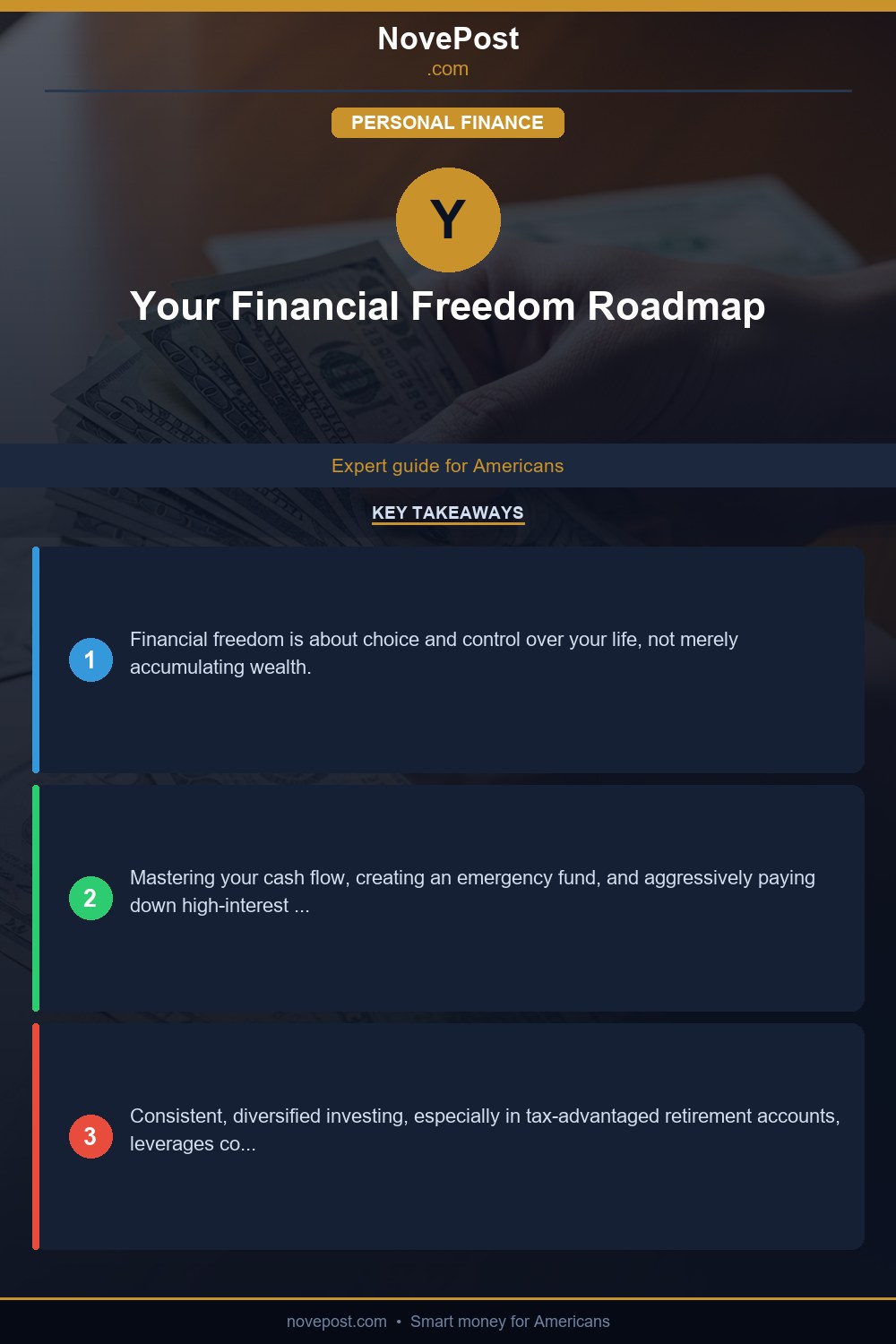
Imagine a life where your choices aren't dictated by your paycheck. A life where you can pursue passions, pivot careers, or simply take a much-needed break without the gnawing anxiety of bills piling up. This isn't a fantasy reserved for the ultra-rich; it's the essence of financial freedom, and it's an attainable reality for American adults aged 25-45, provided you have a clear roadmap and the discipline to follow it. NovePost.com is here to guide you on that journey, transforming abstract aspirations into concrete, actionable steps.
For many in their prime earning years, the concept of financial freedom can feel overwhelming, a distant dream obscured by student loans, rent, and daily expenses. But it's not about becoming a millionaire overnight; it's about building a robust financial foundation that grants you control, resilience, and the power to live life on your own terms. It’s about having enough passive income to cover your living expenses, giving you the ultimate flexibility.
The Pillars of Your Financial Freedom Roadmap
Achieving financial freedom is a marathon, not a sprint, built upon several interconnected pillars. Each pillar supports the next, creating a strong, sustainable structure for your future.
Master Your Cash Flow
The first step on any financial journey is understanding where your money comes from and, more importantly, where it goes. This isn't about deprivation; it's about awareness and intentionality.
- Budgeting and Tracking: Implement a budgeting system that works for you. Whether it's the 50/30/20 rule (50% needs, 30% wants, 20% savings/debt repayment), a zero-based budget, or an app like Mint or YNAB, the goal is to categorize your spending. This reveals hidden money leaks and empowers you to reallocate funds towards your freedom goals. For example, if you find you're spending $400 a month on dining out, perhaps $150 of that could be redirected to investments.
- Crush High-Interest Debt: High-interest debt, especially credit card debt with average APRs often exceeding 20%, is a significant impediment to financial freedom. Prioritize paying this down aggressively. The "debt avalanche" method (paying highest interest first) saves the most money, while the "debt snowball" (paying smallest balance first) provides psychological wins. Choose the method that keeps you motivated. Imagine freeing up hundreds of dollars each month currently eaten by interest payments.
- Build Your Emergency Fund: Before you dive deep into investing, establish a robust emergency fund. This liquid savings account should hold 3-6 months of essential living expenses. It acts as a financial shock absorber, preventing you from going into debt when unexpected costs arise, like a job loss or a major car repair. Aim for at least $1,000 to start, then steadily build it up.
Fuel Your Growth Through Smart Investing
Once your cash flow is under control and your emergency fund is in place, it's time to put your money to work. Investing is where your money starts generating more money, accelerating your journey to freedom.
- Start Early, Stay Consistent: The power of compound interest is often called the "eighth wonder of the world." Starting early, even with small amounts, yields incredible results over time. For instance, investing $300 per month from age 25 to 65, assuming an average annual return of 8%, could grow to over $1 million. Waiting just 10 years to start means you'd need to invest over $700 per month to reach the same figure.
- Utilize Tax-Advantaged Accounts: Maximize contributions to retirement accounts.
- 401(k) / 403(b): If your employer offers a match, contribute at least enough to get the full match – it's free money! The 2024 contribution limit for most employees is $23,000. These contributions are pre-tax, reducing your taxable income now.
- Roth IRA / Traditional IRA: For 2024, you can contribute up to $7,000 to an IRA. Roth IRAs are funded with after-tax dollars, meaning qualified withdrawals in retirement are tax-free. Traditional IRAs offer a tax deduction in the present, with taxes paid in retirement.
- Health Savings Account (HSA): If you have a high-deductible health plan, an HSA is a triple-tax-advantaged account (tax-deductible contributions, tax-free growth, tax-free withdrawals for qualified medical expenses). It's an often-overlooked retirement savings vehicle.
- Diversify Your Portfolio: Don't put all your eggs in one basket. Invest in a mix of assets, such as low-cost index funds or Exchange Traded Funds (ETFs) that track broad market indices (e.g., S&P 500). This provides diversification across hundreds or thousands of companies, reducing risk compared to individual stock picking.
- Understand Risk Tolerance: Your investment strategy should align with your comfort level for risk. Younger investors typically have a higher capacity for risk as they have more time to recover from market downturns, often opting for a higher allocation to equities (stocks). As you approach your goals, you might gradually shift to more conservative investments.
Protect Your Progress
Building wealth is essential, but protecting it is equally important. Unexpected events can derail even the most meticulously planned financial freedom roadmap.
- Essential Insurance: Ensure you have adequate coverage:
- Health Insurance: A medical emergency without insurance can be financially catastrophic.
- Auto & Home/Renters Insurance: Protect your assets and liability.
- Life Insurance: If you have dependents, term life insurance provides crucial financial protection for your loved ones should the unthinkable happen. A general rule of thumb is 5-10 times your annual salary.
- Disability Insurance: Your income-earning ability is your greatest asset. Both short-term and long-term disability insurance can replace a portion of your income if you become unable to work.
- Basic Estate Planning: It's not just for the wealthy. A simple will, a durable power of attorney, and an advance healthcare directive ensure your wishes are followed and your assets are distributed as you intend, preventing unnecessary stress and costs for your loved ones.
Optimize Your Income & Taxes
While often overlooked, growing your income and minimizing your tax burden are powerful accelerators on your financial freedom journey.
- Boost Your Earning Power: Continuously invest in yourself. Acquire new skills, pursue certifications, or negotiate higher salaries. Explore side hustles or build passive income streams that align with your interests and expertise. An extra $500 per month, consistently invested, can dramatically shorten your timeline.
- Tax Efficiency: Understand tax deductions and credits. Maximize contributions to tax-advantaged accounts. Consider tax-loss harvesting in taxable brokerage accounts (if applicable) to offset capital gains. Consult with a qualified tax professional to ensure you're not leaving money on the table.
Common Roadblocks and How to Overcome Them
The path to financial freedom isn't always smooth. Be prepared for common pitfalls.
- Lifestyle Creep: As your income increases, resist the urge to immediately upgrade your lifestyle proportionally. Maintain a relatively consistent standard of living and direct the additional income towards savings and investments. If your salary increases by 10%, aim to save at least 5% of that increase.
- Analysis Paralysis: Don't let the pursuit of the "perfect" plan prevent you from starting. The best time to plant a tree was 20 years ago; the second best time is today. Take imperfect action. Start with a simple budget, open an IRA, or set up an automatic transfer to savings.
- Emotional Investing: The market will have ups and downs. Avoid making rash decisions based on fear or greed. Stick to your long-term investment strategy, rebalance periodically, and remember that market timing is a fool's errand.
Your Next Steps: Building Momentum
The journey to financial freedom is deeply personal, but the principles remain universal. Here’s a checklist to get you started or keep you on track:
- Review Your Spending: Analyze your last 3 months of bank statements and credit card bills. Identify where your money is truly going.
- Set Clear Goals: Define what financial freedom means to you. Is it retiring by 55? Having enough passive income to work part-time? Quantify these goals.
- Automate Your Savings: Set up automatic transfers from your checking to your savings and investment accounts on payday. "Pay yourself first."
- Educate Yourself Continuously: Read books, follow reputable financial news sources, and stay informed.
- Find a Support System: Talk to financially savvy friends, consider a financial advisor, or join online communities to stay motivated and accountable.
Your financial freedom roadmap is a living document, evolving as your life changes. It requires consistent effort, patience, and a willingness to learn. But the rewards—the peace of mind, the choices, the ability to truly live your life on your own terms—are immeasurable.
Don't wait for "someday." Take the first concrete step today. Open that retirement account, create that budget, or pay down that high-interest debt. Your future self will thank you for taking control of your financial destiny.