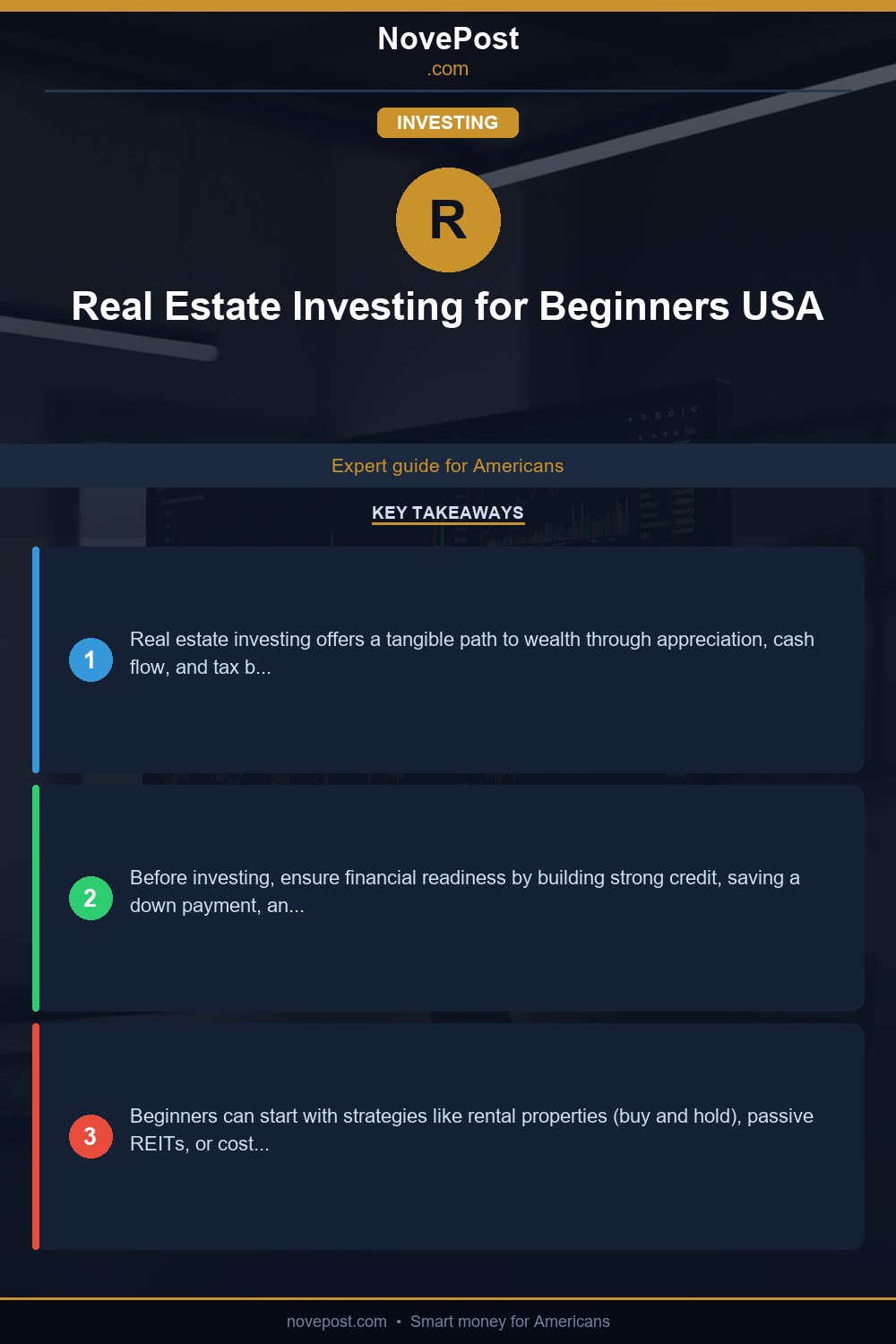
For many Americans, the dream of financial independence often conjures images of stock market gains or successful businesses. Yet, a more tangible, time-tested path to wealth building lies beneath our feet: real estate. While the thought of owning an investment property might seem daunting, especially for those just starting out, the truth is that real estate investing for beginners in the USA is more accessible and potentially rewarding than you might imagine. It offers a unique blend of stability, income generation, and wealth accumulation that few other asset classes can match, provided you approach it with knowledge and a strategic mindset.
Why Real Estate Should Be Part of Your Financial Plan
Real estate isn't just about shelter; it's a powerful engine for building long-term wealth. Here’s why it consistently attracts savvy investors:
- Appreciation: Historically, real estate values tend to increase over time. While not guaranteed, a well-chosen property in a growing market can significantly appreciate, boosting your net worth.
- Cash Flow: Rental properties can generate consistent monthly income after expenses, providing a reliable source of passive income.
- Tax Advantages: The U.S. tax code offers numerous benefits to real estate investors, including deductions for mortgage interest, property taxes, insurance, and depreciation, which can significantly reduce your taxable income.
- Inflation Hedge: As inflation rises, so do property values and rental income, making real estate a strong hedge against the erosion of purchasing power.
- Leverage: You can control a significant asset with a relatively small down payment, amplifying your potential returns. For example, a 20% down payment on a $300,000 property means you control $300,000 worth of assets with just $60,000 of your own capital.
Getting Started: Laying Your Financial Foundation
Before you even begin browsing listings, solidifying your personal finances is paramount. This is the critical first step for any aspiring real estate investor.
Financial Readiness Checkup
- Credit Score: A strong credit score (generally 700+ FICO) is crucial for securing favorable loan terms and interest rates, which can save you tens of thousands of dollars over the life of a mortgage.
- Down Payment: While some loans allow for low down payments, having 10-20% of the purchase price saved is ideal for conventional investment property loans. For owner-occupied multi-family properties (like house hacking), FHA loans can be as low as 3.5%.
- Emergency Fund: Beyond your down payment, maintain a robust emergency fund – typically 6-12 months of living expenses – to cover unexpected repairs, vacancies, or personal financial shifts.
- Debt-to-Income Ratio (DTI): Lenders scrutinize your DTI. Aim for a DTI below 43% to maximize your chances of loan approval.
Market Research and Goal Setting
Understanding your local market and defining your investment goals will guide your search.
- Know Your Market: Research local demographics, job growth, population trends, average rents, and property values. Tools like Zillow, Redfin, and local real estate agent insights are invaluable. Look for areas with strong rental demand and potential for appreciation.
- Identify Your Strategy: Are you seeking immediate cash flow, long-term appreciation, or a combination? Your goals will dictate the type of property and location you target.
- Property Types: Consider single-family homes, multi-family units (duplexes, triplexes), condos, or even commercial properties (though often more complex for beginners).
Common Real Estate Investing Strategies for Beginners
While the world of real estate is vast, several strategies are well-suited for those just starting their journey.
1. Buy and Hold: Rental Properties
This is perhaps the most straightforward and popular strategy for beginners. You purchase a property, rent it out to tenants, and hold it for the long term, benefiting from both rental income (cash flow) and appreciation.
- Pros: Consistent income, potential for significant appreciation, tax benefits, leverage.
- Cons: Active management (or cost of property manager), potential for vacancies, maintenance costs.
- Actionable Step: Look for properties that adhere to the "1% Rule" – where the monthly rent is at least 1% of the purchase price (e.g., a $250,000 home should rent for at least $2,500/month). While not always achievable in hot markets, it's a good benchmark. Calculate the capitalization rate (Cap Rate = Net Operating Income / Property Value) to compare potential returns across different properties.
2. House Hacking
A fantastic entry point, especially for younger investors. House hacking involves buying a multi-unit property (duplex, triplex, quadplex) or even a single-family home with extra rooms, living in one unit/room, and renting out the others. Your tenants' rent helps cover or entirely pay your mortgage.
- Pros: Dramatically reduces or eliminates your own housing costs, often allows for owner-occupant financing (like FHA loans with 3.5% down), hands-on experience as a landlord.
- Cons: Less privacy, potential for tenant conflicts in close quarters.
- Actionable Step: Explore FHA loans, which require a minimum 3.5% down payment and are designed for owner-occupied properties. This can be a game-changer for reducing upfront costs.
3. Real Estate Investment Trusts (REITs)
If you want to invest in real estate without the hassle of property management, REITs are an excellent passive option. REITs are companies that own, operate, or finance income-producing real estate across various sectors (e.g., apartments, data centers, retail). You buy shares in a REIT, much like buying stock, and receive regular dividend payments.
- Pros: High liquidity (can buy/sell easily), diversification across many properties, professional management, typically high dividend yields (often 3-5% annually).
- Cons: No direct control over properties, subject to stock market volatility, no leverage benefits.
- Actionable Step: Research publicly traded REITs on major stock exchanges. Consider diversifying across different REIT sectors (e.g., residential, industrial, healthcare) to mitigate risk.
Key Metrics and Due Diligence
Smart investing requires understanding the numbers and doing your homework.
- Cash Flow: Calculate your projected monthly income (rent) minus all expenses (mortgage, taxes, insurance, maintenance, property management, vacancy reserves). Positive cash flow is your goal.
- Cap Rate: Net Operating Income (NOI) / Property Value. This helps compare the profitability of different properties regardless of financing. A higher cap rate generally indicates a better return, but also potentially higher risk.
- Return on Investment (ROI): Measures the profitability of an investment relative to its cost. (Annual Return / Total Investment Cost) x 100.
- Due Diligence Checklist:
- Property Inspection: Essential to uncover hidden issues. Budget $300-$500 for a professional inspection.
- Appraisal: Ensures the property's value supports the loan amount.
- Title Search: Confirms clear ownership and identifies any liens.
- Lease Review: For occupied properties, understand existing tenant agreements.
- Local Regulations: Research zoning laws, landlord-tenant laws, and rental licensing requirements in your target area.
Financing Your First Investment
Securing the right financing is pivotal. Here are common options:
- Conventional Loans: Standard mortgages from banks, typically requiring 15-25% down for investment properties.
- FHA Loans: Government-backed loans with lower down payments (3.5%) for owner-occupied properties, making them ideal for house hacking.
- VA Loans: For eligible veterans and service members, offering 0% down payment for owner-occupied properties, including multi-unit up to fourplexes.
- Hard Money Lenders: Private lenders offering short-term, high-interest loans, often used for fix-and-flip projects. Generally not recommended for beginners due to higher risk and cost.
Actionable Step: Get pre-approved for a mortgage before seriously looking at properties. This clarifies your budget and makes your offers more competitive.
Understanding Risks and Building Your Team
No investment is without risk. Be aware of potential challenges:
- Vacancy: Periods without tenants mean no rental income but ongoing expenses. Budget for 5-10% vacancy.
- Maintenance and Repairs: Unexpected costs can arise. Set aside reserves (e.g., 10-15% of gross rent).
- Market Downturns: Property values can fluctuate. Long-term holding mitigates this risk.
- Problem Tenants: Can lead to legal fees, property damage, and lost rent. Thorough tenant screening is vital.
- Illiquidity: Real estate isn't as easily sold as stocks. It can take weeks or months to liquidate.
To navigate these complexities, build a strong team:
- Real Estate Agent: Find an investor-friendly agent experienced in income properties.
- Lender/Mortgage Broker: To help you secure the best financing.
- Property Manager: If you prefer a hands-off approach (expect to pay 8-12% of gross monthly rent).
- General Contractor/Handyman: For repairs and renovations.
- Real Estate Attorney: For legal advice and contract review.
- Accountant: To help maximize tax benefits.
Conclusion: Your Journey to Financial Freedom Starts Now
Real estate investing for beginners USA is a journey, not a sprint. It requires education, patience, and a willingness to learn, but the rewards can be transformative. By understanding the fundamentals, building a solid financial foundation, and choosing a strategy that aligns with your goals, you can confidently take your first steps into this powerful wealth-building arena. Don't let the perceived complexity deter you; start small, educate yourself continuously, and remember that every seasoned investor was once a beginner. The most crucial step is the first one. Begin your research today, talk to experienced investors, and start planning your path to long-term financial security and independence through real estate.