The dream of financial security often feels like a distant horizon, especially when you're navigating the complexities of student loans, career growth, and the rising cost of living. You know you should save more, but between rent, bills, and the occasional splurge, where does it all go? The truth is, building significant savings isn't just about earning more; it's about seeing where your money is going and, more importantly, where it could be going. This is where a robust savings tracker becomes your most valuable financial ally.
For many American adults aged 25-45, the challenge isn't a lack of desire to save, but a lack of clear visibility and consistent motivation. Without a tangible way to track progress, even the most ambitious savings goals can feel overwhelming and unattainable. A well-implemented savings tracker demystifies the process, transforming abstract aspirations into concrete, actionable steps. It’s not just about crunching numbers; it’s about empowering you with control and celebrating every dollar saved towards your future.
Why a Savings Tracker is Non-Negotiable for Your Financial Future
Imagine trying to drive to a new city without GPS or a map. You might eventually get there, but it would be a frustrating, inefficient, and likely expensive journey. Saving money without a tracker is much the same. A dedicated savings tracker provides:
- Clarity and Visibility: It shows you exactly how much you've saved, how much more you need, and your estimated completion date. This visual representation is incredibly powerful.
- Motivation and Accountability: Seeing your progress, even small increments, is a huge motivator. It turns saving into a game you're winning, fostering a sense of accomplishment.
- Early Problem Detection: If you're falling behind, your tracker will highlight it, allowing you to adjust your spending or savings strategy before it becomes a major issue.
- Goal Breakdown: Large goals can be intimidating. A tracker helps break them down into manageable weekly or monthly contributions, making them feel achievable. For instance, a $10,000 down payment goal in 18 months translates to saving approximately $556 per month – a much less daunting figure.
- Behavioral Change: The act of tracking itself makes you more mindful of your spending habits, often leading to better financial decisions without feeling deprived.
Choosing Your Ideal Savings Tracker: A Tailored Approach
There's no one-size-fits-all savings tracker. The best option for you depends on your comfort with technology, your desire for automation, and your personal learning style. Let's explore the most popular categories:
Manual Trackers: The Tangible & Visual Approach
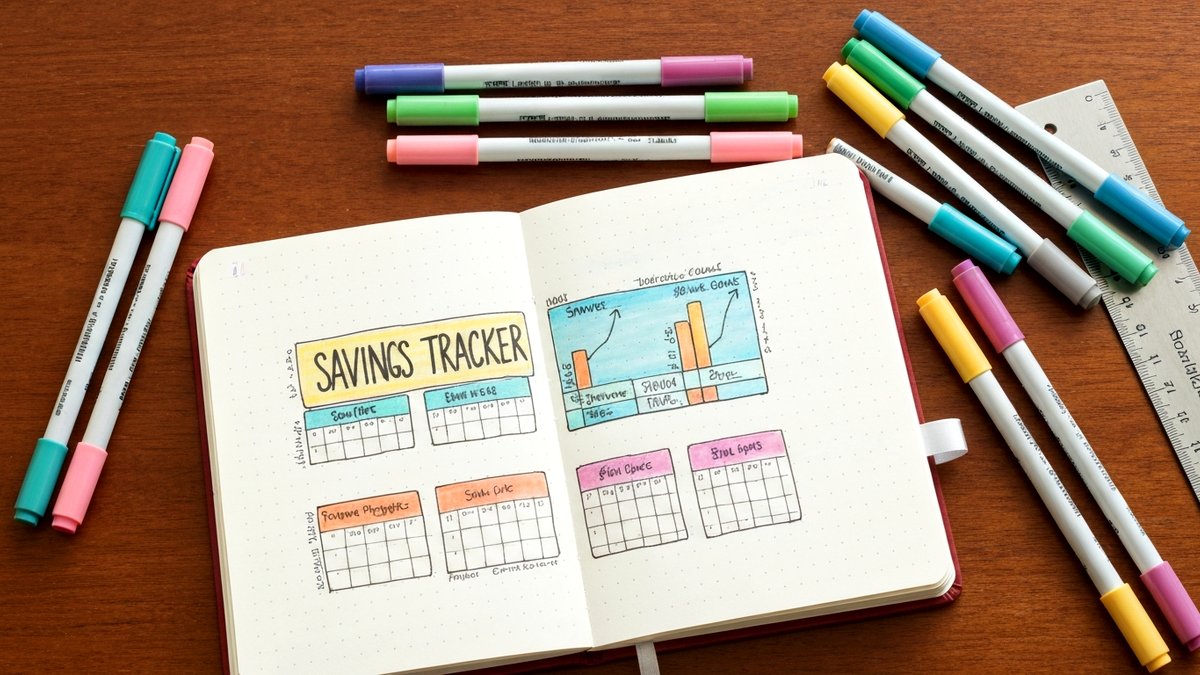
- Notebooks & Journals: Simple, accessible, and highly customizable. You can draw progress bars, color in milestones, or create intricate bullet journal spreads.
- Pros: No tech required, highly visual, satisfying tactile experience, zero cost beyond a notebook.
- Cons: Requires manual updates, prone to human error, no automated calculations.
- Printable Templates: Numerous free or low-cost templates are available online (e.g., Etsy, Pinterest) for specific goals like emergency funds, debt payoff, or home down payments.
- Pros: Pre-designed, often visually engaging, easy to print and use.
- Cons: Still manual, can accumulate paper, less flexible once printed.
- Envelope System: While primarily a budgeting tool, dedicated envelopes for savings goals (e.g., "Vacation Fund," "New Car") can serve as a physical tracker.
- Pros: Very tangible, ensures money is physically set aside.
- Cons: Not ideal for large sums or long-term goals, security concerns for cash.
Digital Trackers: Automation & Analytics at Your Fingertips
- Spreadsheets (Excel, Google Sheets): The gold standard for customizable digital tracking. You can create formulas to automatically calculate progress, percentages, and projected completion dates.
- Pros: Highly flexible, powerful calculation capabilities, many free templates available, excellent for detailed analysis.
- Cons: Requires some initial setup and basic spreadsheet knowledge, less automated than apps for transaction import.
- Budgeting & Savings Apps: Platforms like Mint, YNAB (You Need A Budget), Personal Capital, or even specialized savings apps like Digit or Chime offer integrated tracking. They often link directly to your bank accounts, categorizing transactions and showing your progress in real-time.
- Pros: High automation, real-time updates, often include budgeting and investment tracking, visual dashboards.
- Cons: Can have subscription fees (YNAB is ~$14.99/month), data privacy concerns (linking accounts), less customizable for unique visual tracking methods.
- Bank-Provided Tools: Many banks now offer built-in savings goals features within their online banking platforms or mobile apps, allowing you to set targets and track progress directly.
- Pros: Seamless integration with your existing accounts, often free, secure.
- Cons: Features can be basic, less customizable than dedicated apps or spreadsheets.
Your Step-by-Step Guide to Setting Up a Powerful Savings Tracker
Ready to take control? Follow these steps to implement a savings tracker that works for you:
1. Define Your SMART Goals
Before you can track, you need to know what you're tracking towards. Make your goals SMART:
- Specific: Instead of "save for a house," try "save $30,000 for a 10% down payment on a $300,000 home."
- Measurable: The $30,000 is measurable.
- Achievable: Is saving $30,000 in 3 years (e.g., $833/month) realistic given your income and expenses?
- Relevant: Is buying a home a priority right now?
- Time-bound: "By December 31, 2026."
Examples for the 25-45 age group:
- Emergency Fund: Save $7,500 (3 months of essential expenses) by 12/31/2024.
- Home Down Payment: Save $25,000 for a 5% down payment by 06/30/2026.
- Retirement Boost: Increase 401(k) contributions to 10% of salary by next pay period.
- New Car: Save $5,000 for a used car down payment by 09/30/2025.
2. Break Down Your Goals
Divide your total goal by your timeline to get a monthly or weekly savings target. For a $7,500 emergency fund in 12 months, that's $625 per month. This makes the goal feel much more manageable.
3. Choose Your Tracking Method
Based on the pros and cons above, select the tracker that best fits your personality and tech comfort. If you love doodling, go manual. If you're an Excel whiz, build a spreadsheet. If you want set-it-and-forget-it automation, try an app.
4. Set Up Dedicated Savings Accounts
This is crucial. Open separate high-yield savings accounts for each major goal (e.g., "Emergency Fund HYSA," "Down Payment HYSA"). This prevents you from accidentally spending money earmarked for a specific purpose and allows you to earn a little extra interest (often 4-5% APY on today's market for HYSAs).
5. Automate Your Contributions
The single most effective strategy for saving is automation. Set up automatic transfers from your checking account to your dedicated savings accounts on payday. Even if it's just $50 or $100 to start, consistency is key. Gradually increase this amount as your income grows or expenses decrease. Aim for at least 20% of your net income to go towards savings and debt repayment, following the popular 50/30/20 rule.
6. Track Consistently & Review Regularly
Whether daily, weekly, or bi-weekly, make tracking a habit. If using a manual tracker, physically update it. If using a spreadsheet, input new contributions. If using an app, simply check your dashboard. Schedule a monthly "money date" with yourself to review all your financial accounts, including your savings tracker. This is where you identify any discrepancies or areas for improvement.
7. Celebrate Milestones
Did you hit your first $1,000 in your emergency fund? Did you save 25% of your down payment goal? Celebrate these wins! It could be a small, guilt-free treat (like a nice coffee) or simply acknowledging your progress. Positive reinforcement keeps you motivated for the long haul.
Advanced Tips & Common Pitfalls to Avoid
- Beware of Lifestyle Creep: As your income increases, resist the urge to immediately upgrade your lifestyle. Instead, funnel a significant portion of that raise (e.g., 50-70%) directly into your savings goals.
- Don't Be Discouraged by Setbacks: Life happens. If an unexpected expense derails your progress for a month, don't abandon your tracker. Adjust your plan, re-commit, and keep moving forward.
- Involve Your Partner: If you're in a relationship, make savings tracking a joint effort. Shared goals and transparency significantly increase success rates.
- Utilize Windfalls Wisely: Tax refunds, bonuses, or unexpected gifts are prime opportunities to accelerate your savings. Commit a portion (e.g., 75%) directly to your goals.
- Focus on One Major Goal at a Time (Initially): While you might have multiple goals, prioritize one or two major ones to build momentum. Once you gain confidence, you can diversify your savings efforts.
Conclusion: Your Path to Financial Empowerment Starts Now
A savings tracker isn't just a financial tool; it's a powerful psychological aid that empowers you to visualize your future and take deliberate steps to achieve it. It transforms vague aspirations into tangible progress, making the journey to financial security less daunting and infinitely more rewarding. Whether you're aiming for a robust emergency fund, a down payment on your first home, funding your children's education, or securing a comfortable retirement, the act of consistent tracking will be your compass.
Don't let another month pass by wondering where your money went. Choose a tracker, set your goals, automate your savings, and start charting your course to financial freedom today. Your future self will thank you for taking this crucial step.